Life on board
A considered approach to controls, materials and everyday routines aboard a yacht.
Design around a familiar gesture
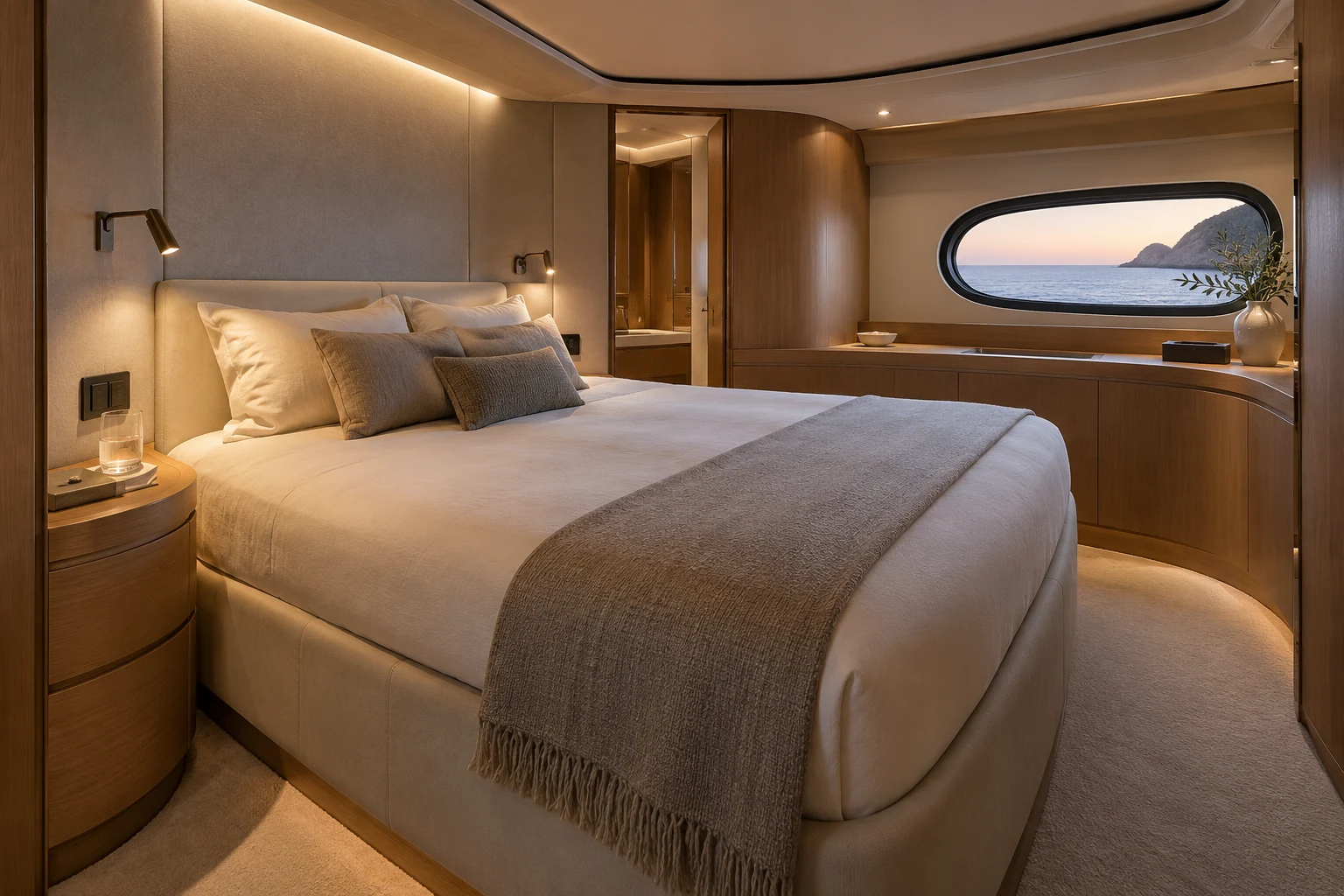
Controls are small elements, but they are used repeatedly. In a cabin or shared saloon, their position, feel and clarity can have a strong effect on the experience of the interior. Begin by describing the routines: arriving, reading, preparing for rest and moving through the space at night. Work out what a person needs to control at each point.
This is an interior-planning conversation before it becomes a selection of plates and buttons. Consider the relationship between the entrance, seating, bed and storage. A control that is visually discreet should still be easy to find and understand. Review the arrangement with the people responsible for the vessel’s systems so that the intended experience and technical design develop together.
Make functions easy to understand
Vimar’s nautical offering includes coordinated wiring devices and control options, with possibilities for customised wording, symbols and finishes. Available functions and combinations depend on the selected products and system. Start with the functions the project needs, then consider how they are presented to the person using the room.
Keep the everyday interaction simple. If a guest has to experiment with several buttons to find the reading light, the layout needs another look. A brief that describes the desired behaviour in plain language is useful: what should happen at the entry, what belongs by the bed, and which functions need to remain independent? Agree these decisions before finalising the appearance of the controls.
Read the finish in its setting
A finish should be considered beside the actual joinery, upholstery and wall materials. Look at samples under the proposed lighting as well as daylight. Reflections, edges and the relationship between a plate and its surrounding surface are often more noticeable in a compact interior. The smallest detail can become part of a repeated visual rhythm.
Vimar offers several design ranges and material possibilities. Selection should remain specific to the range, function and installation requirements. A visual preference does not establish technical suitability. Record the preferred appearance separately from the required function so that the project team can confirm a combination that answers both, without assuming every finish is available for every device.
Connect the interior brief to the system
A complete control scheme includes equipment that may not be visible in the finished room. The actuator linked below is a technical product reference, not a decorative switch or a complete yacht-control package. Its function and compatibility must be checked within the specified system. The concept image does not show a documented installation of that product.
For an initial conversation, share the vessel type, room plans, desired functions and preferred visual references. Identify the people responsible for electrical design and approvals, and ask which product documentation they require. This allows the discussion to move from a mood or material preference to a coordinated schedule. Keep a record of the approved selections so that later changes to a finish or function can be reviewed in context.
Partner reference: Vimar nautical systems ↗
Related products
Options to explore for this approach. Confirm the selected configuration for your project.

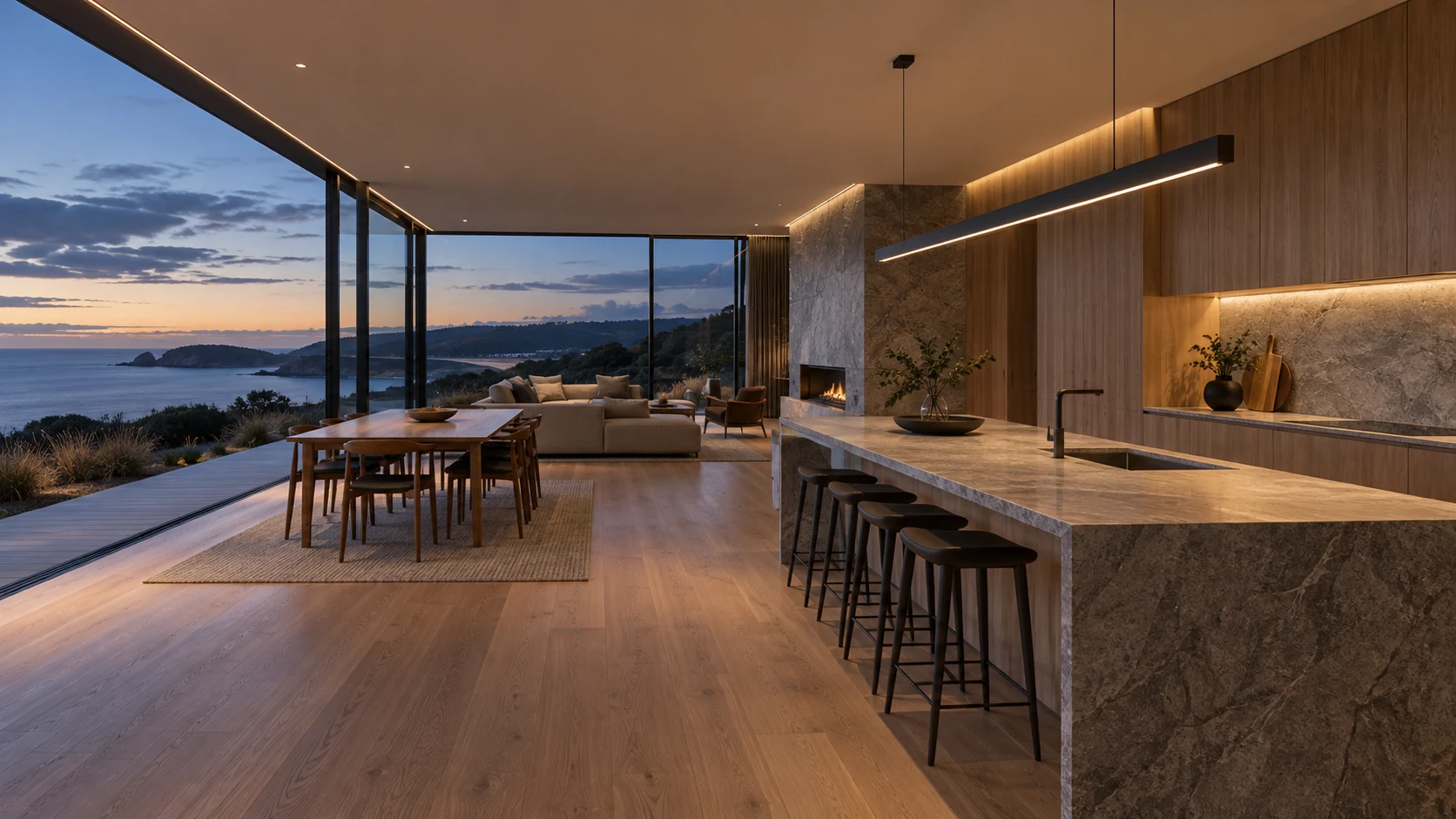
Concept visualisation. Scene images are illustrative and do not document completed projects or the installation of the products suggested here.